THE MONETISATION OF BREATHWORK: WHY CATHARSIS IS NOT THE SAME AS HEALING
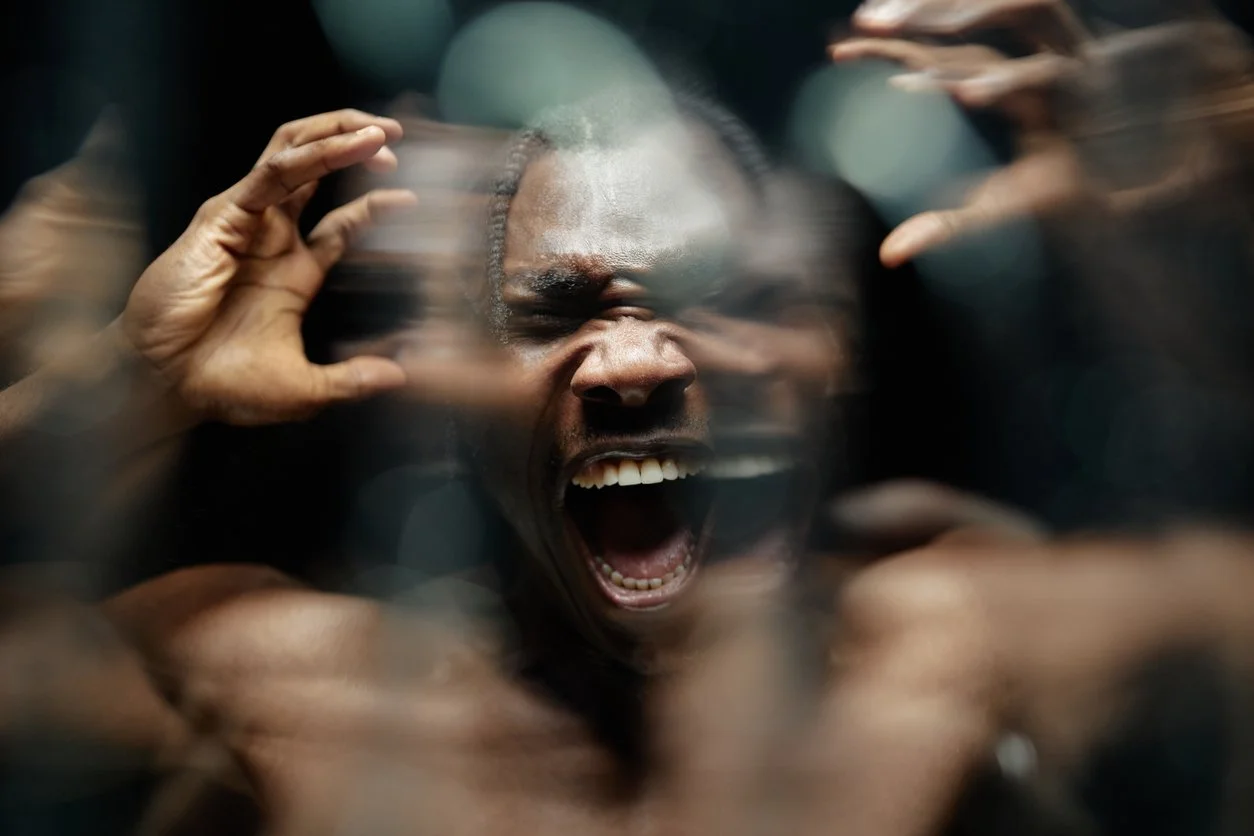
Today we explore the rise of large-group cathartic breathwork sessions, and what happens when the experience becomes the product.
A hundred people lie on the floor of a darkened room. They have eye masks on and headphones in.
They haven’t been read a contraindications waiver, they don’t understand the physiology of breathwork, they haven’t been told about consent to touch or told that they can retract that consent at any point, and they haven’t been told what kind of things might arise physically, mentally, emotionally, or spiritually. They don’t know if the facilitators have been fully trained in the practice that they are being invited into, and they don’t know how to resource themselves during or after the session.
Now to the breathwork practice itself
Most people are breathing hard, with a ton of effort, grasping the inhale and forcing the exhale. They are breathing on cue, to a soundtrack only they can hear. One or two facilitators move between the bodies, kneeling here and there, placing hands onto people who can’t see or hear them coming. Perhaps they agreed to this once, on a form or with a raised hand before the eye mask went on, but now there is zero nuance and zero co-regulation potential as two primary and important senses are blocked (sight, and hearing in the room beyond the headset)
These evenings are filling up, and filling up fast. Big rooms, big numbers, big feelings, and a queue already forming for the next one.
I want to talk about what we are building when breathwork looks like this.
WE’RE curious! These rooms are full for a reason
The reason is not that people are foolish. Many of us know there’s ‘stuff’ we want to change in our lives, or maybe we’re just curious too about these dynamic, loud, visually hooking experiences.
It’s fair to say that most people are carrying more than their nervous systems can manage, although ‘managing’ is definitely what we do. We push down on work issues, grief, fear, sadness, shame, overwhelm, frustration, and alienation and instead seek the things that help us ‘escape’ the feelings somehow, even for a moment. We recognise the low persistent hum of a life lived mostly in the head, disconnected from the body and the heart’s truth.
In these sessions, we find ourselves in a room that gives permission to fall apart, in company of others falling apart and maybe for one night, we feel seen and less alone. Maybe we find kinship in the recognition that it’s not just us.
These days, in the break down of community, we have almost nowhere left to do this together. The days where neighbours checked on each other and village halls were full with jumble sales and food shares, community gatherings, youth clubs and playgroups, have diminished. The church halls have emptied and the sense of the ‘village’ went with it. Personally, I think this subconscious seeking of community is one of the reasons why plant medicine ceremonies are so overused - people keep going back because they desperately want that sense of connection and community, and they don’t know how to find it when back in their own worlds. They find it somehow in these spaces, places and moments, so they go back, but in returning they forget something essential. Building real community requires intention, integration, presence and sustainable connection with the parts of us that have forgotten how to do that.
The intense, collective, bodily experiences that nearly every human culture before ours built have quietly disappeared from most people’s lives. Ceremony and ritual is not new, but the New Age wellness ‘industry’ has turned it into a trauma processing field that if not careful becomes an endless cash cow.
Naturally, when a room offers to give that back, people come, of course they come.
I’ve really been sitting with this inquiry: Why do these events fill up so rapidly? Why are so many people turning towards them? Why do some of those people come away saying that they’ve had an incredible experience whilst others are deeply traumatised by them? More importantly, what and who is this serving? I don’t have the answers yet so I’d love your perspectives!
What is Breathwork Actually Doing?
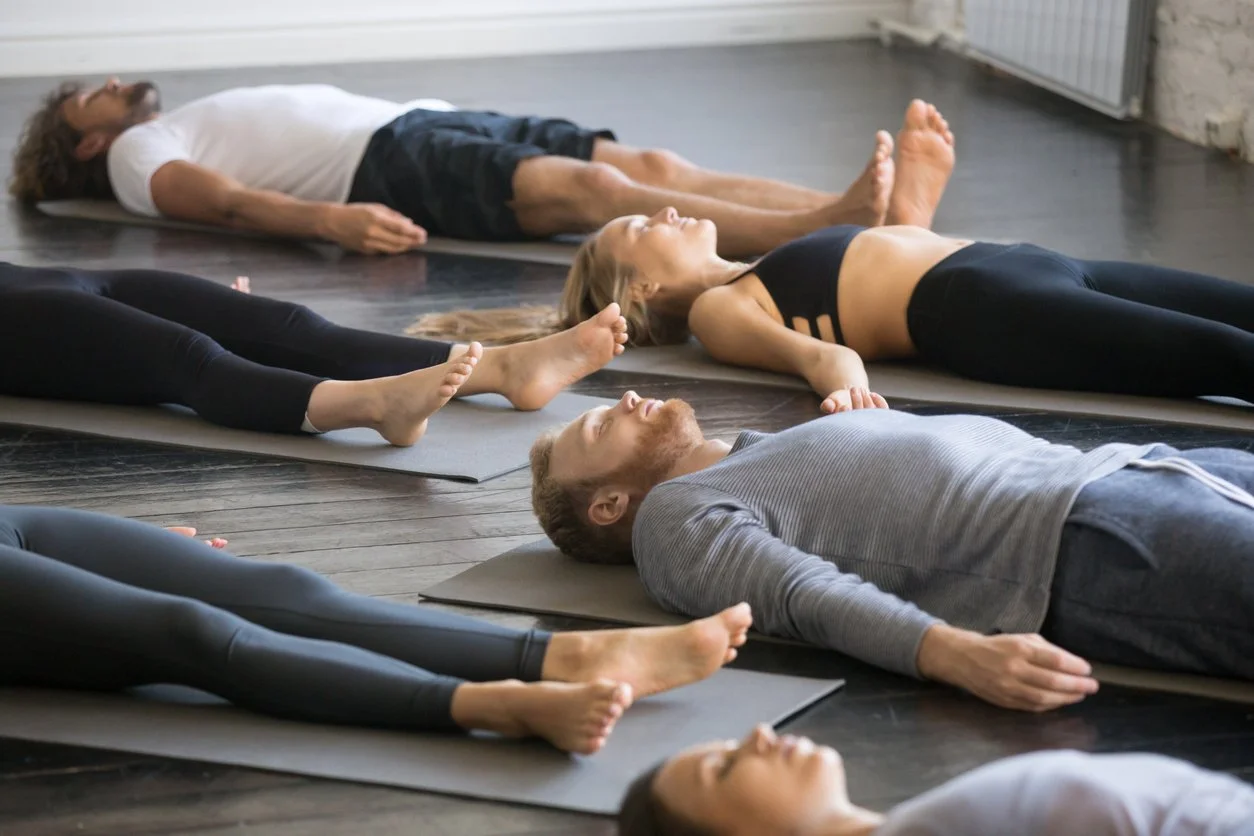
Breathe hard through an open mouth for twenty minutes and your blood chemistry shifts. Your carbon dioxide levels drop, your sympathetic nervous system is activated and the body moves into an altered physiological state. Our shifting physiology affects our psychology so no surprises perhaps that feelings that have been held down for years can come up fast. People are not imagining what happens to them on that mat, something genuine is taking place. Our prefrontal cortex takes a back seat while our limbic system and our reptilian system come to the forefront as the brain and body chemistry change. Practically speaking, this is where the tingling in the hands comes from, the tightness that can creep into the fingers or around the mouth, the cramping in the hands and the lightheadedness. This sense of slipping into a state that feels very different to ordinary waking awareness isn’t imagined, it’s your body responding to a real change in how you are breathing and how that’s affecting you.
So how does the contained eye mask and headphones experience also change things?
Firstly, they make you anonymous in an instant and you now exist in your own little universe - no connection, no co-regulation, no awareness beyond your inner landscape and the music and/or voice through the headphones. No one can see your face and as far as you’re aware, you’re not being watched. For a person who has spent their whole life managing how they appear to others, this perceived anonymity can be the thing that finally lets their guard down and gives some sense of capacity for release. I acknowledge that there is some value in that and that’s one part where I understand the appeal. The demand for these sessions is honest from the breather’s perspective but the question is what is being done with it, by whom and with what depth of training or understanding?
So, who is holding the room?
Here is the question I would want answered before I lay down on any mat to breathe. I’m selective but I’m also adventurous. I’m adventurous, but I’m also discerning.
A couple of years ago in Manchester, I saw some adverts for a breathwork session and privately messaged the facilitator to ask what contraindications there were for the practice. He listed two! Had my son seen that very same advert he could have gone along and been at serious risk, because he holds one of the main contraindications for the practice that wasn’t discussed anywhere in this person’s information or framing. That’s just serious harm waiting to happen, in my opinion.
Ask yourself, who is holding this room, and what do they actually know about what can happen inside a body under twenty minutes of hyperventilation breathing? What kind of training have they had in consent, physiology, trauma, ethics? Do they understand cultural differences and distinctions which can be incredibly varied and therefore require significantly different approaches.
Breath at the intensity we’re speaking to here can bring on tetany, where the hands and the face cramp and lock. It can tip someone into a panic attack. It can bring on seizures, elevate blood pressure, increase heart rate, reduce oxygen distribution to the tissues, elevate dissociation, and re-surface forgotten memories. It can bring to the surface a trauma response with no words attached (pre-verbal) and offer no way out. If your facilitator is not aware of all of this and doesn’t know how to hold that safely, then the space is not ethical. Anyone who has held (or attended) breathwork sessions will have witnessed or experienced many of these things. Thankfully facilitators who are well trained and people who have access to agency, co-regulation and informed consent choice have significantly increased potential for post-session integration and long term embodied transformation.
Would you go and do a bungee jump with a person who didn’t understand the equipment but said they’d seen what happens and they were sure it was safe? Not a chance! This work requires training. Not a weekend or even a couple of months, but real extended, depth training which includes knowledge of the body, trauma, consent, power dynamics, ethical practice and a whole lot more, all of which require time.
It is not only reasonable to ask what training the people designing these formats carry, it’s essential. You have a right to know who is meeting your vulnerabilities and your tender edges. If a facilitator won’t answer your questions, that’s all the information you need.
One hundred people in headphones and eye masks with untrained support is insane. In a group that size with high activation going on and less than a handful of people supporting, it’s not possible to observe who is shifting beyond capacity, who might be going into activation they’re not ready for, who might be getting up and leaving the room when they’re not safe to get in a car and drive home. The maths alone tells you that most of the room is unheld.
Consent cannot survive the mask and the headphones
We’ve given this piece an extra space because it’s important. Consent is not a signature on a form, it’s a live ‘conversation’ between two nervous systems, and it can be retracted at any moment.
Framing should always include:
a thorough description of what consent might look like
how a person can ask for help if needed
how a person can change their mind at any point and how that will be communicated to other people in the room who need to know you’ve changed your touch or intervention consent.
If five people are busy holding a hundred people in activation, there is no room for that kind of subtlety, furthermore, the conversation runs on two immediate channels - sight and sound. I see you/your hand approaching and I can move, flinch, shake my head, meet your eyes. You hear me say no, or you hear the change in my breath, and you stop.
Now, take away the sight and take away the sound and you have removed two primary channels that consent relies upon.
A person in an eye mask cannot see a hand coming toward them. A person in headphones cannot hear who is approaching them. The form they signed an hour ago, in a lit room, in a new experience where they may not want to be the only one who says no to touch (society’s messages run deep), cannot speak for the person now lying on the floor with their history rising up through them.
Consent given before the experience is not consent to what happens during it - it can’t be. Consent is not fixed.
Touch is not neutral
With a body breathing hard, shifting into an altered state, carrying a history they may not even have named yet, touch can be an effective (or harmful) intervention. It can change what is happening, whether or not anyone intends it to or wants it to.
Done with skill, at the right moment, with presence, attunement and agreement, touch can help someone really stay with their experience. Done without those things, it can land as the exact thing the person walked in carrying as trauma. A hand on the chest is not the same experience for everyone - for some it can mean comfort but for others it can feel like the return of something they have spent a lifetime running away from.
The person placing the hand needs to understand and respect the nuances of consent, and needs to be attuned to the person in front of them moment by moment especially when moving towards an intervention. In the dark, at scale, with a mask between them, and hearing not available, none of that is available. Without training, and without live consent, what gets called holding is really a stranger’s hands on a body that can’t see them coming and can’t speak to informed consent. That’s one of the main things that concern me about these huge group cathartic sessions without adequate support.
The release is not the healing
This is the part I most want people to understand because it is the least obvious.
The big emotional release can feel like the point. It’s loud and visible and can feel liberating in the moment. It may be the part you tell your friends about, the part that says “it was amazing you have to try it!” but the loudest part of the work is not where the change lives. Sustainable change lives in the days, weeks, months, and sometimes years after we begin this work. Of course, some people will have less material to process and work with than others, but for most of us it’s about our nervous systems slowly learning that we are ‘safe’. In the unglamorous, ongoing work of integration, what comes up gets metabolised, made sense of, and woven back into our lives bringing a new sense of self, lighter somehow, more able to truly connect with ourselves and others again. I think that work is quiet, slow and often a commitment to ourselves, an act of self devotion with a great and authentic capacity for self-reflection.
Cracking a hundred people open in a single night will be okay for some people. They’ll survive and perhaps even thrive in it. They are probably resourced, they have support, they land softly and maybe they are more naturally resilient. For others, a big unintegrated opening does not land softly at all, instead it can reopen a wound and leave no one there to meet it when the lights have gone down and the ‘high’ wears off.
When the experience becomes the product
People should be able to make a living from this work. Breathwork, somatic practices, and other healing modalities are gaining traction in the mainstream, albeit slowly. The fact that many of these things are taken less seriously is a direct result of how colonisation cut us off from ancient rituals, practises, and ceremonies, but as these things return and people begin to question what is good for them, I believe we will need more well-trained facilitators if we are to truly stand by the reputation and potential of this wonderful work.
However, when the experience itself becomes the product and it’s all about the money, the quality of the practice inevitably suffers. Guiding hundreds of people into connected breathwork practice without proper support or training is simply another Ponzi scheme, another multi-level marketing trick, another thing that people will be more likely to close off to than open up to. I can’t tell you how many times I’ve heard people say, “I went to this breathwork session and I will never do breathwork again!” - not because the practice was wrong but because the space was poorly held.
Catharsis scales. Attunement doesn’t. Catharsis can look sexy, presence is invisible. Catharsis can look like it’s really working, but the real work is usually unseen.
The parts that actually keep people safe can’t be produced at volume. Screening each person properly before they arrive doesn’t scale. Reading a single nervous system moment by moment doesn’t scale. Negotiating live consent doesn’t scale. Sitting with someone quietly in the aftermath doesn’t scale, so these things are often the first to go. The dramatic experience is visible, reproducible and sellable but the careful quiet holding is not.
The people running these rooms are not necessarily acting in bad faith but the ego loves recognition even when it comes at a price.
A last word.
None of this means breathwork should stay small, free, quiet or solemn. It means something much more simple; that the people on the floor deserve to be held by someone who knows what they are holding, knows what ‘staying in your lane’ actually means, and understands all we’ve talked about here.
You deserve:
A ratio of facilitators to participants that makes it possible to know you can be seen and supported.
Screening before people arrive, so that the person for whom this is not safe today is met and offered safe alternatives before they are on the mat, not after.
Consent negotiated before anything begins and left genuinely open to be withdrawn, which means keeping enough sight and sound available that a person can still say no and still be heard.
Touch offered only where there is explicit prior and ongoing agreement.
Integration and aftercare built into the work, not sold back afterwards as an upsell.
Thorough framing about what a session may look, sound and feel like.
Honesty about what breath can bring up, given before people commit.
Facilitators who are properly trained, over a longer period of time, to recognise what can surface in the practice and how to manage that if it does.
None of this makes the work smaller, on the contrary, it makes it more robust, and way more trustworthy.
The hunger these rooms are meeting is real, and it seems it’s not going away. People will keep looking for somewhere to make sense of all we carry in this ever visible often overwhelming world. The only question is whether the places they find will really hold them, or simply open them and move on to fill the next massive venue.
We can do better than that.
For more on our Breathwork Facilitator Training, please visit our website below:
https://sevendirectionsbreathwork.com/breathwork-training-program
As the founder of the school, I hold this work with great reverence and an enormous passion. My next cohort starts in October 2026, running on Monday mornings (8:00-10:30am) and the following one in April 2027, running on Tuesday evenings (6:00-8:30pm)
You can request a free no obligation inquiry call HERE
or a curriculum and longer interest call by emailing hello@sevendirectionsbreathwork.com